
Ingredients

Equipment
Instructions
For the sponge
- Mix a couple tablespoons of the flour, the yeast and two or three tablespoons of the water in a small bowl to prepare a thick and sticky dough. Take a little of the already weighted amount of flour and water for this step. Additionally, I like adding a pinch of sugar to promote the yeast's activity.
- Cover with a dry kitchen towel or a little plastic wrap for about 15 minutes on the counter for the yeast to start being active.
Prepare the dough
- This is a bread I learned how to do by hand and carry on doing it like this, at least for now. Therefore, make a volcano on your counter with the flour and inside the crater add the sugar, milk, egg, and sponge.
- Use your dough scraper to add little by little dry flour into the crater. If necessary, add a little of the water you have available. However, you may not need any at all. Whenever the dough is fully hydrated, add the butter and carry on kneading to incorporate it into the dough.
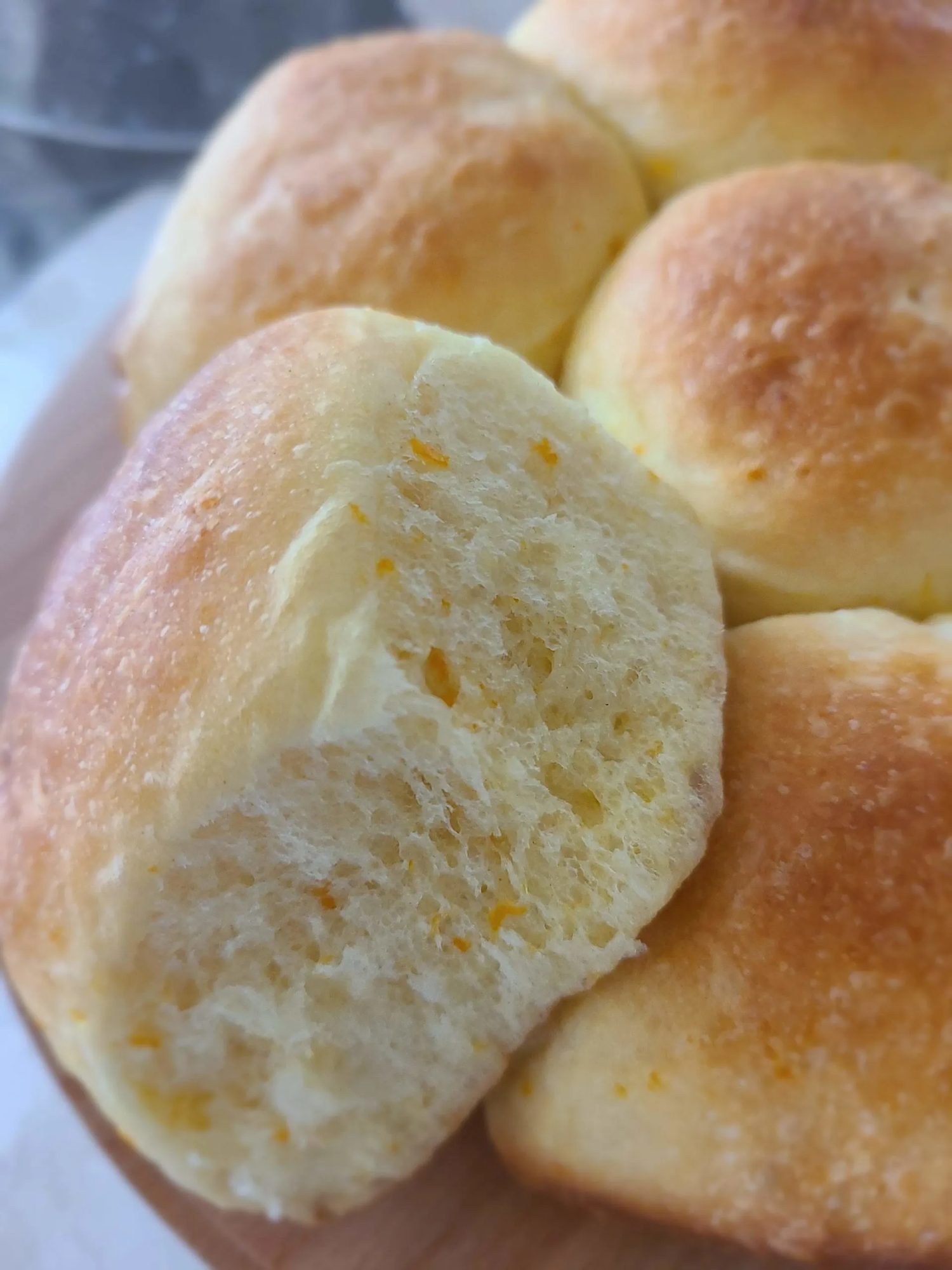
- Add then the orange zest and salt, and continue kneading for about 10 minutes.
- Knead until your dough is elastic, yet not sticky.
- Verify how elastic the dough is. You will see it will stretch and will almost be see-through.
- Portion in balls of 50 grams and let it proof for 2 hours in the refrigerator. Don't forget to cover it with plastic wrap or with your kitchen towel.
- Take out of the fridge and let it come to temperature for about 30 to 45 minutes. Glaze with the melted butter.
- Bake for approximately 20 minutes at 180 °C or 350 °F.
- Unmold and let it cool down on a rack.
Notes
Preheated oven at 180 °C or 350 °F.
Prepare this bread by hand. This will allow you to feel humidity and see how elastic it is and determine if it needs more hydration or kneading, and deciding when it’s ready.